Friday, 30 April 2010

Never Neutral


Opening 6 May 18:00
7 May – 5 June 2010

Chris Marker, Enrique Metinides and Dara Birnbaum
1st fl. (previously URA), Misir Apt.
Istiklal Caddesi, Beyoglu, Istanbul


Never Neutral is an exhibition of works by Chris Marker, Enrique Metinides and Dara Birnbaum that explore the shifting and complex use of documentary composition within visual art practices. As opposed to theatre based non-fiction film which utilises actors and sets, documentary has come to present "life as it is" (Dziga Vertov). Beyond these methods are artistic practices that accept and enjoy the responsibility of personal viewpoints and sensibilities that bleed into acts of documentation.

Sans Soleil (Sunless), 1983, by Chris Marker, combines original and stock footage to stretch the genre of the documentary form into a sensitive reflection on memory and human existence. This influential film conveys many places and multiple world views, but in the end it is coloured by Marker's own concerns about the permeability of time and life. Although Sans Soleil uses the vocabulary of a documentary, its passage over many continents and time periods, as well as Markers' specific empathy for humanity, separate his film from being a documentation in a very intimate way as it is imbued with his personal values.

Photographs ranging from the early 1960s through the 1990s by Enrique Metinides were taken as journalistic shots, many of which were published in Mexico City's newspapers such as La Prensa, Alarma and Crimen. Metinides published his first photograph at only 12 years old, and as for many photographers or filmmakers, the camera became his "second eye". Throughout his career he was attracted to accidents, crimes, disasters, and human suffering. While he officially captured these events for the media, his personal interest was to compose scenes that grew out of and embedded the event. His ability to incorporate bystanders as members of the crowd, as well as responding to the camera, implicated himself within the images, giving them a life beyond the realm of the immediate press.

In an early video work by Dara Birnbaum, Cannon: Taking to the Streets, 1990, the artist positions her experience of expressing a political voice during the first Bush era. Breaking with traditional documentary format and using tools from low and high ends of video technology, Birnbaum replays events of student activism in the United States. She cuts, edits and adds special effects to VHS reels taken by other participants of the 1987 event "Take Back the Night" a march held at Princeton University held to voice concern over sexual harassment. Birnbaum's re-compilation of others' footage depicts the march itself and the strong reactions it solicited, in a format that allows documentation material to appear in public as a concentrated, cohesive statement.

Curated by November Paynter and Mari Spirito with Special Thanks to - Simone Subal, Peter Blum Gallery, New York; Amelia Hinojosa, Kurimanzutto Gallery, Mexico City; Karina Daskalov, Goodman Gallery, New York; Rebecca Cleman, Electronic Arts Intermix, New York; Lisa Spellman; Attila Pelit; Cengiz Tanc; Mihda Koray and Robbie-Lee Valentine.

image caption: Enrique Metinides
Sin titulo / Untitled Hotel (Hotel Regis terremoto, Ciudad de Mexico), 1985
Courtesy the artist and Kurimanzutto, Mexico City

Monday, 1 March 2010

Ciprian Mureşan, Galeria Plan B, Cluj


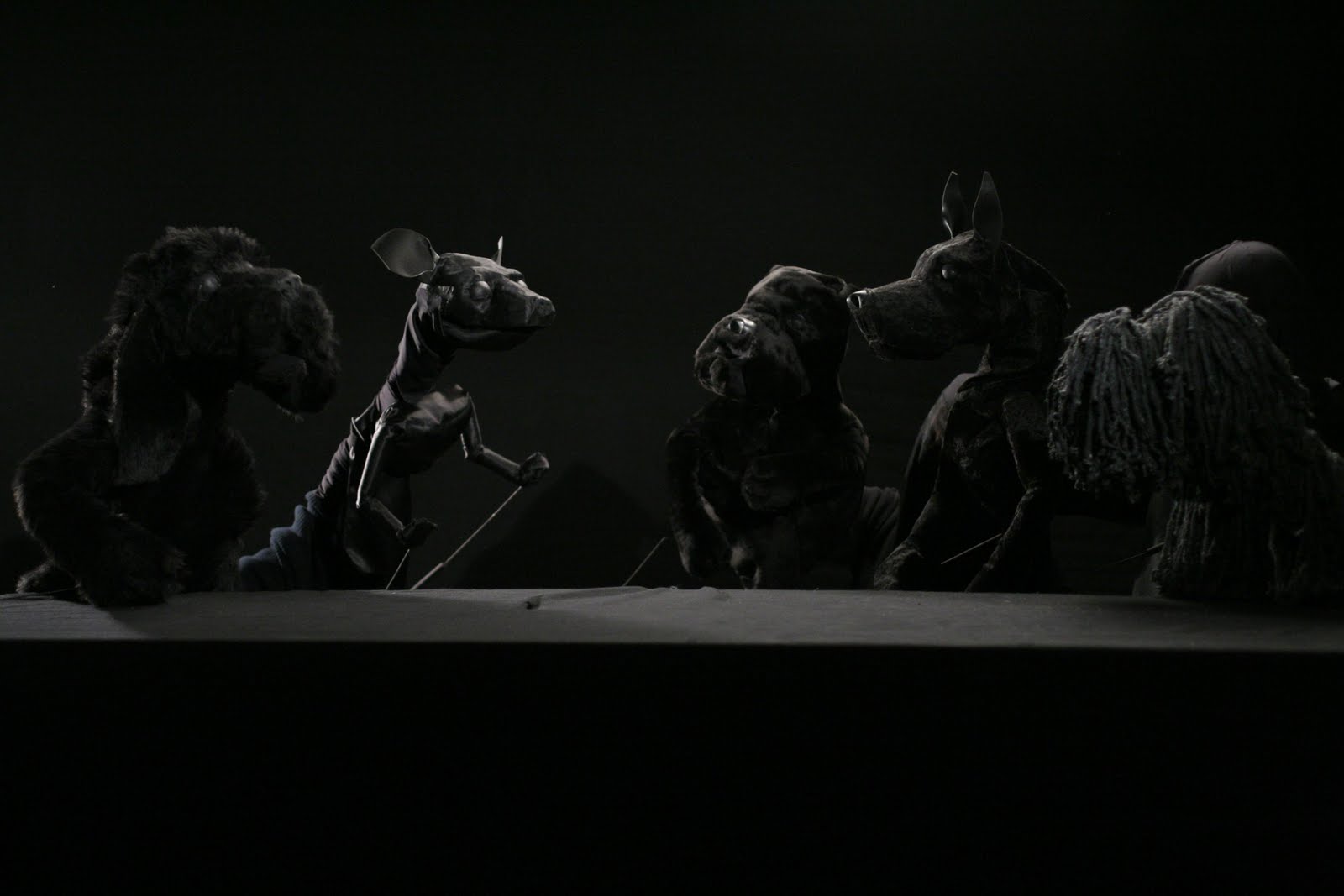
“If we wanna understand the Humans, we gotta see them at their lowest. The Evil—as they call it—that’s what we study today.” This line is the protagonist’s pessimistic view of humanity that opens Ciprian Mureşan’s video Dog Luv, 2009, which premiered at the Romanian Pavilion in the Venice Biennale last year. Based on a script by Saviana Stânescu, Dog Luv was presented at Plan B alongside Untitled (Tom Chamberlain), 2009, a video that teases out the titular English artist’s painting practice. Mureşan’s solo exhibition was the first in the gallery’s new location within an old brush factory—a compound that brings together five galleries and twenty art, design, and performance studios. The artist’s own studio is downstairs, as are those of three other gallery artists; Chamberlain had installed a group of paintings in the artist-run space Laika next door. This cooperative setup has filled an urgent need. Romania still lacks cultural infrastructure; rather than wait for the authorities to act, a core group of artists independently collaborated to take over several floors of the factory. At Plan B, the pairing of Dog Luv, which deals both with the fragile teacher/student relationship and human character more broadly, and Untitled, with the artist working as lone warrior, made perfect sense as a self-critique from within the collective.

Stânescu's dramatic text about humanity’s horrific appetite for torture, interrogation, and execution is played out in Dog Luv by five beautifully hand-crafted puppets of dogs. Maddog, the leader and teacher of the pack, encourages his students to recite the names of various forms of torture practiced throughout history. They do so willingly, rapidly firing off a list that includes stoning, crucifixion, genocide, and water-boarding. He goes on to specify that “the backwards spelling of DOG as GOD is not completely arbitrary.” But it does not take long before his disciples have turned upon him and the play becomes one about the act of torture rather than its theory.

Dog Luv was presented to the left of the space, and to balance its dark intent, Mureşan seems to have looked to the angel on his right shoulder to find Tom Chamberlain. An accomplished painter, Chamberlain works by laying down thousands of repeated, patterned brushstrokes using diluted pigments. The content of each canvas is indefinable and the iridescent surfaces seem evanescent. In production, only the glistening of the wet paint hints at the shapes being formed before each section has time to dry. Mureşan’s video follows the development of one painting and was screened in almost real time over three consecutive days.

The shimmering white of Chamberlain's painting-in-progress on the right thus sat in stark contrast to the dark costumes, backdrop, and content of Dog Luv on the left. In the middle, Skull Study after Holbein, 2009, a pencil drawing of the anamorphic skull Hans Holbein included in The Ambassadors, 1533, may have been Mureşan’s attempt to create a tensile connection between the two videos. The subject’s visual ambiguity is an obvious symbol of mortality, but it also reflects the distortion of Chamberlain’s paintings when viewed in reproduction. The trope somehow bridged the gap between two very different stories of humankind, one of a conspiracy that leads to hatred and violence, the other of the individual who aspires alone.

Setting the Scene/Mark Wallinger


British artist Mark Wallinger is in Çanakkale for the second time to explore potential sites and participate in meetings with the city mayor and local authorities about his My City public art proposal. As we discuss his ideas for the work, a large cargo ship, the British Curlew, heads north up the strait towards the Marmara Sea. Mark takes a photograph and explains some detail about the curlew's (the bird) distinguishable bill, a knowledge he acquired when he was a young ornithologist many years ago. The name of the boat seems familiar and Mark thinks he saw the same one on his last visit, a repetition that seems more than relevant to our conversation as he later goes on to talk about his ideas for a public artwork in Çanakkale.

Mark originally considered himself a painter, but during his M.A. and a period of teaching in the art department at Goldsmiths, University of London in the 80s, he was left with a different appetite for his own artistic practice. He goes on to explain that, “as a painter one could happily work within the confines of the form whilst also having the satisfaction of doing a day’s work. To work in a variety of forms requires patience. You have to wait and trust the ideas will come.” His infamous commission Ecce-Homo, a life-size sculpture of Christ that occupied the “Fourth Plinth” in London's Trafalgar Square in 1999, set a new tone for his work, and afterwards he started receiving numerous commissions for public artworks, but while many have been asked of him, not all are realised.

One of the projects that did make it to fruition was commissioned by Andrea Schlieker (the curator who also nominated him for the My City project) for the 2008 Folkestone Art Triennial in South England. Mark describes Folk Stones (2008) as “not being a commemorative piece, or about making a grand statement. It was inspired as something more intimate and embedded in the locality of Folkestone.” Folk Stones is a collection of beach pebbles laid out in a massive square, each one individually numbered from 1 all the way up to 19,240 to correspond to the exact number of British soldiers killed on 1 July 1916, the first day of the Battle of the Somme. The work is inspired by the one million soldiers who left from Folkestone Harbour to fight on the battlefields of France and Flanders. Mark describes the numbering as “a significant yet pointless act... a modern-day recalling of the labour of Sisyphus.”

Folk Stones is now a permanent public artwork, which clearly engages with the city of Folkestone, and as Mark points out it does so “without being commemorative, or celebratory and without using languages of imperialism.” For him, these aspects are some of the most important when thinking about what a public artwork should be and do today. Iconic sculptures are often based on photographs and hence are forms of commemoration that are merely three-dimensional versions of found images in bronze or stone. Such public artworks simply send the viewer back to the photograph, they are symbols of the past and identifiers of glorious or tragic moments in this history.

At this point Mark proposes that, “Perhaps Picasso's painting Guernica was truly the last major public artwork (in terms of art in a new expanded field).” He goes on to say that, “There is nothing for the people in Çanakkale. There is the horse of Troy – a desperate request from Hollywood to insert some kind of touristic reminder, and then there is the text on the hills of Gallipoli that also speaks to the passer by.” In a sense, both the horse and the text act like promotional materials, created only for those who come and go too quickly to absorb the two main historical memories that this city holds – Troy and Gallipoli; on the other hand, there is really no public entity or statement that has been made for those who live here. In contrast, Mark's work in Folkestone was successful in that it did something quite quietly. The emphasis and context directed the local audience's attention to something in the past without stating facts of history. In this story of public art, Mark wants to create for Çanakkale an artwork that is heartfelt, visceral, and that is both a response to how the locality affects him and is also made for the city's people.

With these thoughts in mind, Mark recalls that when first invited to the My City project and on being given the site of Çanakkale, he started thinking about the knowledge he already had on the area, the little he knew about Gallipoli, the history of Troy, and the confluence point of the Dardanelles as a place for both trade and conflict throughout the ages. His initial thoughts for Çanakkale became an extension of the work he produced in Folkestone. He says he liked the notion of having thought about a “Western front on the one hand (Folkestone) and that he was now looking at the ramifications of a front at the other end of Europe.” Excited by this prospect, but also nervous of the intensity of the history of Çanakkale, the next concern of his was, “Where does one start when there is so much to address?”

While London has been Mark’s main inspiration as it is his base, he has, over the years, worked in a number of divided cities including Lefkosa and Jerusalem. He says that, “Somehow these places feed into all the following work. While a new context can be daunting, by accepting the gifts a place has, new inspirations feed you.” Yet, he also realises that he is recognised for having made several important works that refer to wars and their historical legacy, and that here again, this could be what is expected of him. Although he does not have more than a few experience of Çanakkale, he says, “I feel I have some legitimacy to be working on a public artwork here, given the involvement of Britain in the battle of Gallipoli and the fact that this needs to be a history that is taught more in the UK. What is the meaning of Empire, what could they mobilise?” He also mentions other related references such as English dramatist and poet Christopher Marlowe's unfinished minor epic based on the legend of Hero and Leander, as well as Lord Byron's poetry, and first ever documented swim across the Hellespont from Europe to Asia in 1810.

With so many potential inspirations, it was in fact the sea, its persistent use and the people’s connection with the “back-forth motion of the Dardanelles,” that detained Mark for a while. But, he says, “at the same time, the idea of a Camera Obscura or a similar system felt right. He is thus working on a proposal that will create the opportunity for its audience to notice or identify something that makes a spark and at the same time presents a stately and mythological phenomenon that is relentless. Closing the conversation with a reference to Joyce's Ulysses and the mythology of Cyclops, Mark says of the view across the strait, “Here, yesterday suggests tomorrow. Sometimes something momentous takes place, on other days nothing seems to change and the differences are imperceptible. My work will offer a contemplative excuse to keep looking. Sometimes it is nice to simply frame something.”

Saturday, 20 February 2010

As the land expands

2nd March - 15th April 2010
Al Riwaq Art Space, Bahrain


Can Altay, Fayçal Baghriche, Osman Bozkurt, Shezad Dawood, Mounir Fatmi, Mariam Haji, Basim Magdy, Randa Mirza, Mohamed, Huma Mulji, Rana El Nemr, Fahrettin Örenli, Güclü Öztekin, Mounira Al Solh, Miha Strukelj; with video screenings by artists including Köken Ergun, Ciprian Muresan, Wael Shawky and Erzen Shkololli.
Organised by November Paynter in collaboration with Al Riwaq.


As the land expands is an exhibition that includes art works chosen for their determined urgency and prevalence to the context of Bahrain and the local audience. Taking as a starting point the pool of works in the collection of the ‘Artist Pension Trust, Dubai’, for which Paynter is the Director, over 100 art works that cover a range of media, subject matter and aesthetic tendencies were presented on video and slide to a group of artists and curators during a two day workshop held at Al Riwaq in late 2009. From this presentation a number of art works that seemed the most important to show to a wider audience in Bahrain were selected by the group.


Certain themes and interests dominated the workshop conversation; these included issues of ecology and in particular land reclamation, the speed of urban development in the region and most specifically, in terms of the success and reach of the Al Riwaq gallery, the need to present art works that would provoke a reaction from the local audience. Thus, while the curatorial process was determined by a group decision, and the works presented here do not all relate to any one theme, they do all respond to the location and the current interests of those who participated in the initial selection process.


To make a coherent presentation, a few additional art works have been added to expand on certain themes and ideas, and to also activate the desire to present work in the surrounding neighbourhood of the gallery to include outdoor interventions such as the work Red Zone (a car-cover sewn from kaffiyeh) by Mohamed and a series of open-air video screenings.


Al Riwaq Art Space

P.O. Box 54622

3 Osama Bin Zaid Avenue

Adliya, Bahrain

Telephone: +973 17717441

Fax: +973 17715421

info@alriwaqartspace.com

www.alriwaqartspace.com


Saturday, 6 February 2010

Ciprian Muresan / Yama


For the first time Yama hosts a hand-drawn animation that appears like a sketch on the night sky. A commissioned work by Romanian artist Ciprian Murean Untitled (2010) stems from conversations about his earlier work Pioneers (2008), an installation comprising forty lithographs that depict different children holding bags to their mouths. Many have misread the simple act that appears in each frame and assume that the children are blowing the bags up in order to burst them. Despite their naive appearance, they are in fact shown sniffing glue, a heartbreaking and depressing sight that is all too common in certain inner city areas and one that is particularly familiar to the public of central Istanbul. At the foot of the Marmara Pera and around the zone of Istiklal Caddesi every night young boys can be seen holding a bag of glue to their faces in the same way.

Rather than directly reference this act Muresan instead plays on the misreadings of his previous work and has produced for Yama a more humourous, but still dark, take on the issue. This time, just one child is highlighted and he is seen blowing up a frog that despite its inevitable likelihood of bursting surprises the boy as it explodes into thousands of pieces. A fun gesture turns out to be a cruel or perhaps simply un-controllable act and at the same time the image of the fairytale frog that turns into a prince/princess is thwarted. As we look up at the dark sky Untitled lights up Yama for a few seconds to propose that anyone can make a wish, but in an instant this bubble bursts and the sad reality of disappointment and broken aspirations that afflicts these individuals takes over from the childhood innocence of the frames before.
Commissioned for Yama by November Paynter.


Ciprian Muresan (b. 1977) lives and works in Cluj, Romania. He is an artist and the co-editor of VERSION artist run magazine and from 2005 an editor of IDEA art + society magazine [www.ideamagazine.ro] In 2009 Muresan was one of the representing artists for Romania at the 53rd Venice Biennale; the same year he also participated in among other exhibitions The Generational:Younger Than Jesus at the New Museum, NYC; Communism Never Happened, FEINKOST, Berlin and Incorrigible Believers, David Nolan Gallery, NYC.


Sunday, 15 November 2009

Haris Epaminonda

To the right of the entrance hangs a small, framed book page that depicts a man looking up at a towering termite mound. The unusual scale and perspective of this landscape with figure sets the tone for the formation and play of space experienced in Epaminonda’s “VOL. IV.” The exhibition follows Epaminonda’s solo presentation “VOL. I, II & III,” which took place at the Malmö Konsthall earlier this year, and here the mazelike reorganization of the space contains a series of three-dimensional collages that Epaminonda describes as “sentences. ” While the first is made up of just one found folio—the image of the man and termite mound—subsequent collages mix bought sculptures placed on pedestals with both black-and-white and colorful secondhand bookplates framed and hung or, in the densest composition, stacked against the wall. Her desire to play with traditional museum hierarchies and the usual formats of display is evident in each scene, but also in the way the presentation feels like an illustrated encyclopedia from which different images or shapes are allowed to haunt the memory, the relationships among them left open to interpretation.

What is striking is that the only objects made to measure by Epaminonda are the beautifully crafted pedestals, each one handpainted in a shade of white or eggshell gray, alongside carefully chosen palettes for the numerous frames. This attention to certain details shifts focus onto the pieces whose job it is to support the objects of display, pieces that in this exhibition also take on the more prominent role of masking and hiding selected iconography. A final statement locates the entire exhibition: A delicate wooden sculpture ensquares the gallery’s central column in a tense embrace, framing it as an implied image that ironically can never be captured in publication.

Monday, 2 November 2009

IDEA - Gulsun Karamustafa

Interview with Gulsun Karamustafa


Thursday, 15 October 2009

Thursday, 3 September 2009

Rehang


Rehang


Opening 5 - 7 pm, Friday 11th September


Rehang is a temporary intervention that will take place in the lobby of the Büyük Londra Oteli for the duration of the 2009 Istanbul Biennial.


In this infamous drinking haunt of Istanbul, paintings and objects by artists Anna Boghiguian, Farida El-Gazzar, Hala Elkoussy, Gülsün Karamustafa, Alisa Margolis and Shahzia Sikander will replace some of the existing framed works and paraphernalia that have for years decorated the lobby.


Hotel lobbies notoriously contain prints, paintings and ornaments and while these are often franchised selections, in the Londra's case they are personal acquisitions. The art works included in Rehang sit easily within this eclectic environment, yet at the same time the lobby creates a very different context for the works' appreciation compared to their usual viewing situation in a white cube gallery space. In this unique setting the included art works become first and foremost objects of decoration, but their references to notions of hybridity, layers of tradition and complex cultural concerns sets them apart from the myriad of found and collected items that surround them. It is this shared platform that creates new narratives and memories for the art works, as well as the Londra's surrounding possessions that may well share similar aspirations with regard to their selection, but are considered from a different perspective and usually do not involve a position of intent. At the Londra, Rehang raises questions of taste, value, commodity and how an art works' environment and location relate to its populist acceptance and its appreciation as an object of art.


Curated by Sylvia Kouvali and November Paynter


Grand Hotel de Londres / Büyük Londra Oteli

Mesrutiyet Caddesi. No: 117 80050 Beyoglu Istanbul

Monday, 24 August 2009

Collection Dubai


Hüseyin Bahri Alptekin | Lamya Gargash | Ivan Moudov | Fahrettin Örenli | Mamali Shafahi | Sophia Tabatadze | Nasan Tur | Tarek Zaki


The exhibition Collection Dubai brings together works by artists that involve practices of collecting, or of accumulating material that is then presented in a gathered format. This ranges from artists who consistently photograph the same type of environment to create a very tight series of images, to others who have collected found material that clearly works together in a collection of like messages or references and finally to those who follow one idea so succinctly within their practice that their ongoing output in itself clearly forms a collection. The other half of the title: Dubai; is intentionally ambiguous and is included in order to question the titling of something as broad and diverse as a collection of art; in this case with regard to a specific collection* that the exhibition's participating artists have been invited to include their work in, even if they have no contact with the city or its newly formed art initiatives. The title therefore questions what it means to use a regional tagging device, in this collection's case as a verifier and a commercially understood entity. The inclusion of the name Dubai also in part refers to the current trend of copying and accumulation that is taking place in the UAE, which, by extension, the work of Lamya Gargash references. In her series of photographs Familial Gargash obsessively brings together a collection of lesser-known imagery from the Emirate's, the bedrooms and lobbies of its local 'one star' hotels, offsetting the Dubai tag's usual analogies of style and glamour.

Amsterdam based artist Fahrettin Örenli has been invited to present a new installation of his fanatically created drawings and photography that form part of his ongoing research into conspiracy theories that often stem from the EU's strategies of integration and the West-East oil pipeline. In contrast two works by Sophia Tabatadze are theoretically collections, but exist as the only element of a potential ongoing practice.

An installation of three videos from Hüseyin Bahri Alptekin's series Incidents present hundreds of images taken in three locations in which disparate tales are woven together to present the touching impression of how individuals can control and organise one moment in space and time, as the world continues its activities around them. Ivan Moudov's Fragments is an incredible assemblage of collected parts taken from different artworks that Moudov found in various museums, galleries and art centers in Europe. The suitcases that contain Moudov's collection act as a portable museum that traces a precisely selected artistic heritage.

In contrast Tarek Zaki's History of O gathers a group of mundane circular objects that are cast to look like rare and valuable archeological artefacts. As Mamali Shafahi works on 2500 collages that hint at the many truths, lies, tensions and ambiguities that exist in and surround Iran; Nasan Tur's installation Good News presents in a newspaper format a sample of infamous media images that at the time of going to print illustrated stories telling only good news, but which in retrospect have not always encountered such happy endings.


*The initial motivator for the framework of the exhibition was to consider the structure of the Artist Pension Trust (Dubai), an initiative that offers selected artists the opportunity to invest works into regional collections in a shared scenario of risk diversification and mutual participation. These collections are temporary and variable as works are committed and sold over a forty-year period and ultimately all the works are dispersed.


Opening reception Saturday 5 September 2009, 21.00 hrs


Exhibition until 25 October 2009

Location: SMART Project Space, Arie Biemondstraat 105-113, Amsterdam